
OUR MONARCH
Canada's Head of State, guardian of continuity and a symbol of national unity
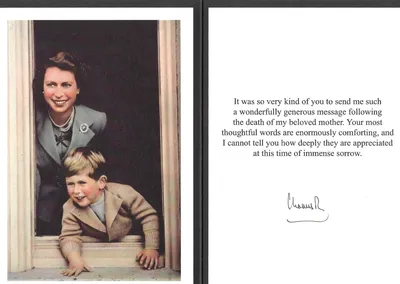
A Letter from His Majesty King Charles III, King of Canada
June 14, 2023, Buckingham Palace,
Letter to the members of the Crown Society of Canada;
« It was so very kind of you to send me such a wonderfully generous message following the death of my beloved mother. Your most thoughtful words are enormously comforting, and I cannot tell you how deeply they are appreciated at this time of immense sorrow. »
Charles R.
- Original letter (English) -
The Monarch
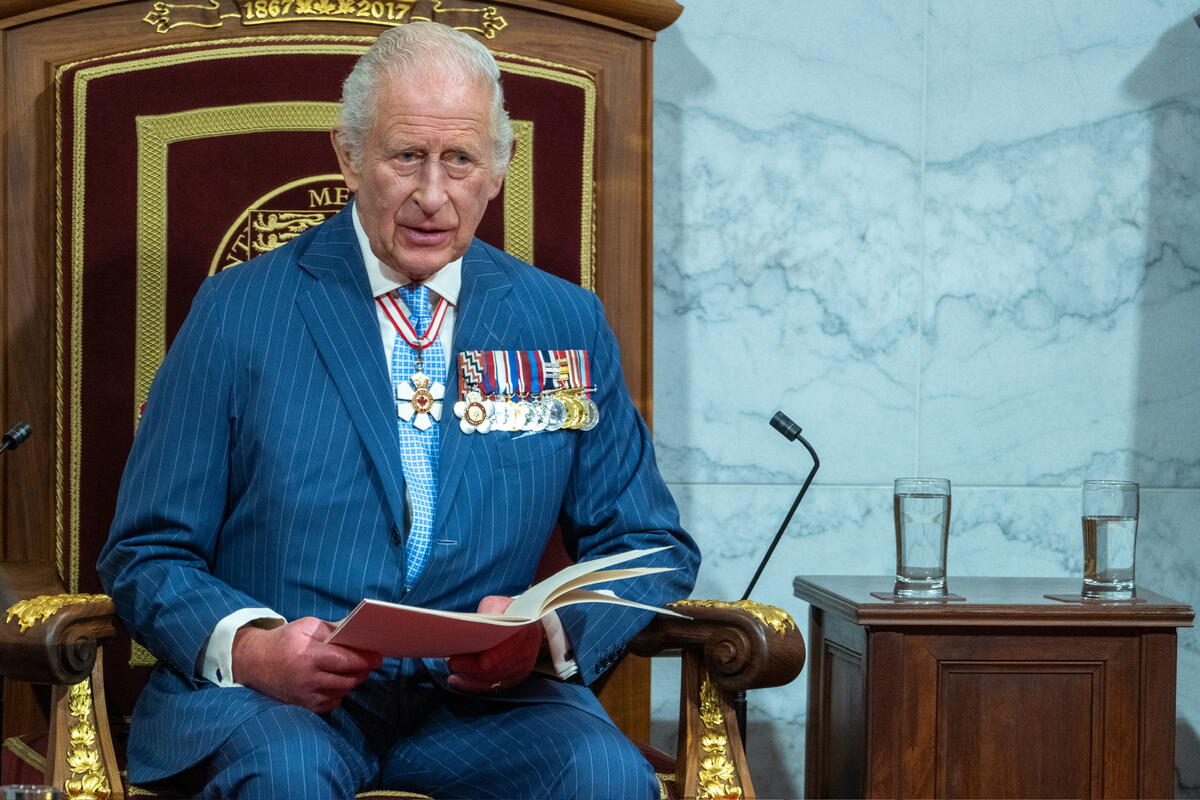
The King, then Prince of Wales, delivers a speech at the Ceremonial Circle in Yellowknife, Northwest Territories, on May 19, 2022.
Canada is a constitutional monarchy. Since 1534, when the King of France claimed what is now Canada, our country's history has been marked by the uninterrupted reign of monarchs — French or British — who have profoundly influenced our nation's development.
Queen Elizabeth II was the first sovereign of Canada to be proclaimed separately Queen of Canada in 1953, when a Canadian law, the Royal Style and Titles Act, officially conferred upon her the title "Queen of Canada." This proclamation reaffirmed that the role of the monarch in Canada was independent of the role of the monarch in the United Kingdom and the other Commonwealth realms.
As constitutional monarch, His Majesty King Charles III does not "rule" the country, but he is nonetheless part of our governmental system and our identity as head of the Canadian state.
The Role of the King
As the embodiment of the Crown, His Majesty's role is to unite Canadians and inspire a collective sense of belonging to our country.
At his Accession Council declaration on September 10, 2022, His Majesty King Charles III said:
I am deeply aware of this great inheritance, the duties and the heavy responsibilities of sovereignty which have now passed to me. In taking up these responsibilities, I shall strive to follow the inspiring example I have been set in upholding constitutional government and to seek the peace, harmony and prosperity of the peoples of […] the Realms and Territories of the Commonwealth throughout the world.
Newly arrived Canadians, members of the federal Parliament, provincial and territorial legislatures, the military and police all swear an oath of allegiance to the King.
We do not pledge allegiance to a document (constitution) or a political entity. We pledge allegiance to a person who embodies all of these elements as well as our collective values.
A Tangible Constitutional Role
Beyond the symbol, the King exercises real constitutional functions, most of which are carried out today by convention, on the advice of the elected government:
- Royal assent — no bill becomes law in Canada without royal assent, granted in the King's name by the Governor General or their representative. This step, although largely ceremonial today, remains a constitutional guarantee that legislative power is exercised within the framework of established institutions.
- The appointment of the Governor General — it is the King who, on the recommendation of the Prime Minister, appoints the Governor General of Canada and the provincial Lieutenant Governors, ensuring a direct link between the Crown and each of the provinces.
- Continuity of the State — unlike an elected president whose term is time-limited, the King ensures institutional continuity that endures through elections, changes of government, and political crises. The Canadian state, through the Crown, never experiences a vacuum of legitimacy.
A Symbol Above the Political Fray
The King belongs to no party and never takes a position on the political issues of the day. This strictly non-partisan role is precisely what allows him to embody the Canadian state as a whole, rather than a government, an ideology, or a passing majority. While prime ministers and members of parliament represent the portion of the population that elected them, the King represents all Canadians, without exception and without political distinction.
It is this neutrality that allows the Crown to act as a constitutional safety net in the event of political deadlock, and that makes the oath sworn to the King — rather than to a party or political leader — a commitment to the State itself and to the entire population it represents.
Why Is the Monarchy Still Relevant in 2026?
In a world where trust in political institutions is eroding and polarization often dominates public discourse, the Crown offers something few other institutions can: stable, non-partisan, enduring continuity that transcends election cycles and passing governments. It guarantees that power is always exercised within established rules, that Canada's parliamentary democracy rests on solid foundations, and that Canadians, regardless of their political allegiances, share a common point of reference. In 2026 as in 1867, the constitutional monarchy remains a quiet but essential safeguard against political instability — and a reminder that service to the State must always come before the interests of any single party.
Portrait of His Majesty King Charles III wearing his uniform as Admiral of the Fleet of the Royal Navy
First Canadian portrait of His Majesty King Charles III, King of Canada
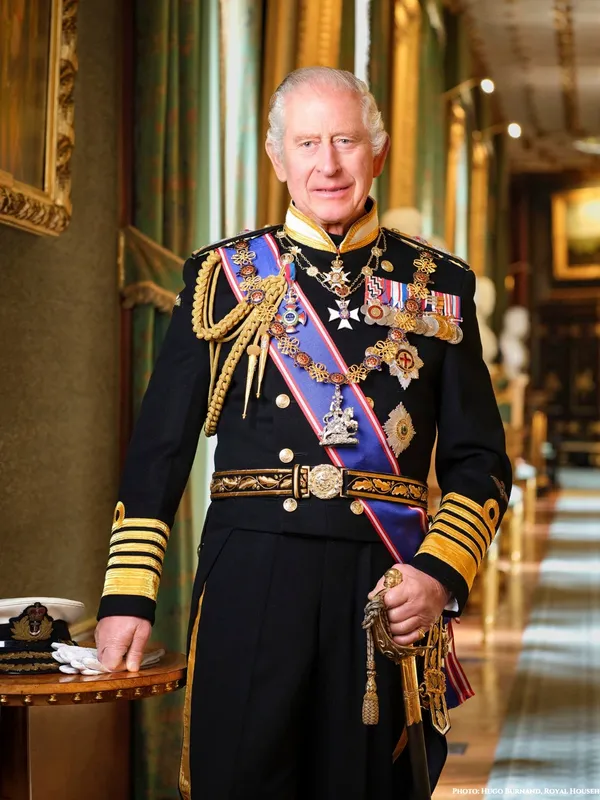
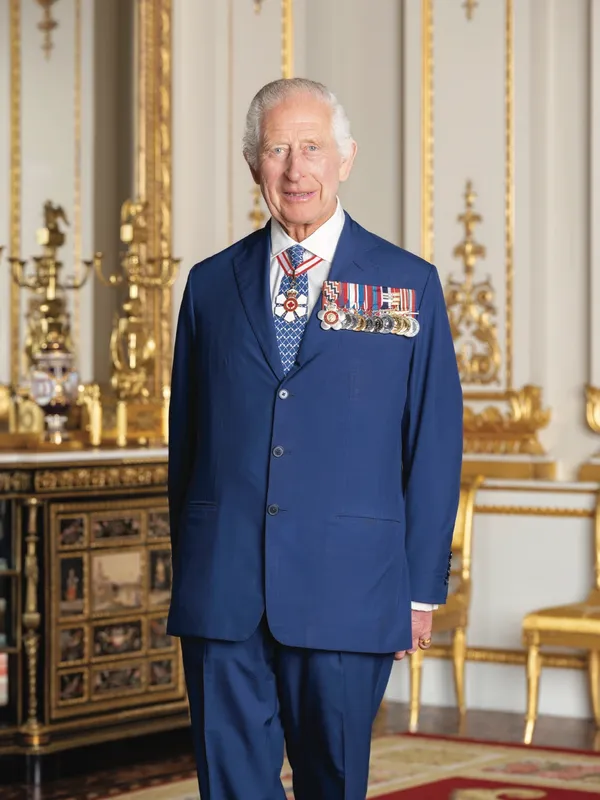
This photograph, taken at Windsor Castle in 2024, was created by Hugo Burnand, official photographer of the Royal Household. Available exclusively to members of the Crown Society of Canada.
Become a member >The Crown Society of Canada has entered into an agreement with Canadian Heritage as the official distributor of the portrait for Canada. To purchase it, please contact us.
Contact us >