EN / FR
Société de la couronne du Canada

History, Institution and Costs of the Canadian Crown

This section presents the key points of a presentation produced by the Crown Society of Canada, covering the history, functioning and real costs of the Canadian Crown. Browse the slides below using the arrows.

Scroll to learn more — 11 slides

1 / 11

Crown Society of Canada

Who Are We?

Non-profit organization founded in Quebec City in 2021 to promote Canada's constitutional monarchy. Present throughout the country, primarily in Quebec, Ontario and New Brunswick.

✦ Official partner for the King Charles III Coronation Medal.
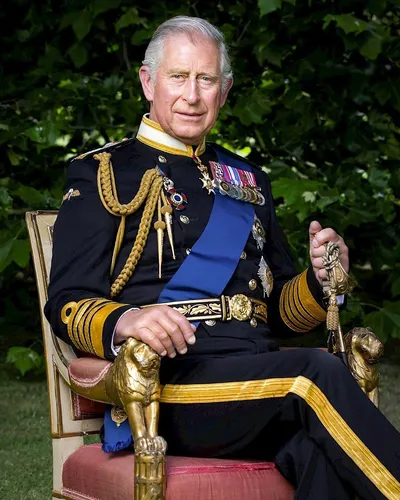
✦ Agreement with Heritage Canada — distributor of the Canadian royal portrait.

Our Mission

  1. 1Support His Majesty King Charles III, his heirs and Canada's royal representatives.
  2. 2Protect Canadian heritage: history, culture, customs and monarchist assets.
  3. 3Promote constitutional monarchy and the Commonwealth.
  4. 4Offer Canadians a dynamic national network for sharing and engagement.
  5. 5Educate the public on Canada's constitutional monarchy.
placeholder Crown Society of Canada Next ❯

2 / 11

Foundations of the Monarchy in Canada

👑 Constitutional Monarchy

Since Confederation in 1867, Canada has been a constitutional monarchy. The King is Head of State, represented federally by the Governor General and in each province by a Lieutenant Governor.

⚖️ Constitutional Role

All federal and provincial laws receive Royal Assent. The government officially bears the title "His Majesty's Government."

🍁 His Majesty King Charles III

Succeeding his mother, Queen Elizabeth II, Charles III has been King of Canada since September 2022. Official title: "Charles the Third, by the Grace of God, King of Canada."

🌐 Commonwealth of Nations

Canada is an active member of the Commonwealth. Canadians pay nothing for the upkeep of royal residences located outside Canada.

"We desire to be a monarchy. As far as possible, we have adopted the British system." — Sir John A. Macdonald, Confederation debates, 1865

📜 Did You Know? In 1865, at the time of the Confederation debates, the American Civil War had just ended. The Fathers of Confederation saw this as proof of the dangers of a divided presidential system, and deliberately chose a parliamentary monarchical model, deemed more stable and less likely to concentrate power in the hands of a single elected leader.

❮ Previous Crown Society of Canada Next ❯

3 / 11

Cost of the Monarchy in Canada

~$65M
Total Annual Cost (2022-2023)
$1.61
Per Canadian, per year
80%
Paid by Ottawa (federal)
20%
Paid by the provinces

Breakdown of Federal Expenditures

Office of the Governor General — $33.9M

GG salary ~$350,000/yr, staff, residences (Rideau Hall, Citadelle de Québec).

Offices of Lieutenant Governors — $12.7M

Lt. Gov. salary ~$170,000/yr + operation of provincial offices.

Cost by Province and Territory

ProvinceBudget (approx.)Cost/capitaNote
Prince Edward Island~$490,000$3.35Highest per capita
Nova Scotia~$981,320$0.95Significant viceregal expenditures
New Brunswick~$700,000$0.88Bilingual province
Newfoundland and Labrador~$450,000$0.85Atlantic province
Saskatchewan~$920,000$0.78Prairie province
Manitoba~$900,000$0.64Central province
British Columbia~$1,400,000$0.583rd most populous
Ontario~$2,800,000$0.18Most populous province
Alberta~$620,000$0.14Low spending
Quebec~$1,302,572$0.09Lowest per capita

Sources: Journal de Montréal (March 2025), Crown Society of Canada. Approximate figures.

❮ Previous Crown Society of Canada Next ❯

4 / 11

Cost per Capita — Provincial Comparison

Quebec has the lowest per capita cost — the gold bar represents it.

P.E.I.
$3.35
N.S.
$0.95
N.B.
$0.88
N.L.
$0.85
Sask.
$0.78
Man.
$0.64
B.C.
$0.58
Ont.
$0.18
Alta.
$0.14
Que.
$0.09
❮ Previous Crown Society of Canada Next ❯

5 / 11

Context: The Value of the Crown

Comparison of public institution costs ($ per Canadian / year)

CBC/Radio-Canada
$32.10
House of Commons
$14.30
Senate of Canada
$2.96
The Monarchy
$1.15

💡 The constitutional monarchy is one of the least expensive institutions in Canada — 20 times cheaper than CBC/Radio-Canada. A republican system would entail significantly higher institutional costs.

❮ Previous Crown Society of Canada Next ❯

6 / 11

Replacing Monarchy with a Republic: Same Costs, Same Functions

Abolishing the monarchy does not mean savings — nor does it guarantee greater democracy or stability.

Head of State and Head of Government: Two Distinct Roles

In Canada, the King (represented by the Governor General) acts as Head of State — a ceremonial, symbolic role that safeguards the Constitution — while the Prime Minister acts as Head of Government, exercising real political power day to day. In several republics, these two functions are merged into a single elected person, as in the United States. This separation allows a non-partisan figure to uphold the institutions while political leadership handles the issues of the day.

A Sovereign Who Is Non-Partisan by Nature

A hereditary monarch belongs to no party, has never campaigned, has no electorate to satisfy and no political donors to appease. This structural neutrality places him in a unique position to act impartially in the event of a constitutional crisis. By contrast, an elected president — even a ceremonial one — often remains associated with a political party, which can weaken their ability to be seen as representing the population as a whole.

Hereditary Sovereign versus Elected President: Lessons from the Republics

Several examples illustrate the risks of a system where head of state and head of government are combined into a single elected, partisan figure:

  • Italy: more than 60 governments have succeeded one another since 1945, despite (or partly because of) the absence of a strong head of state to stabilize the system.
  • France: the President of the Fifth Republic combines the role of head of state with considerable political power — a concentration of authority regularly criticized by constitutional observers.
  • United States: the events of January 6, 2021, when supporters of the outgoing president stormed the Capitol after the contested election results, illustrate how an elected, partisan head of state can become a source of instability in his own right — precisely because he holds both symbolic and political power simultaneously, unlike a monarch who has no electoral stake at all.

These examples are a reminder that a republic guarantees neither greater democracy nor greater stability. According to several international democracy indices, constitutional monarchies — Canada, the United Kingdom, the Scandinavian countries, Japan, the Netherlands — regularly rank among the best-governed and most stable nations in the world, often ahead of comparable republics.

= Same Budget

e.g. Barbados: 232,047 BBD, before = after (2022-23)

= Same Functions

Royal Assent, dissolution, appointments: identical

= Same Residence

State House, Bridgetown: GG → President, same location

In-Depth Case Study: Barbados (2021)

Barbados offers the most recent and best-documented example of a monarchy-to-republic transition within the Commonwealth, and deserves close examination.

Why the Change?

The move is part of a long-standing effort to "complete the circle of independence" begun in 1966. Prime Minister Mia Mottley presented it as a symbolic break with the colonial past — not as a response to any issue or crisis related to the monarchy itself.

What Actually Changed

Almost nothing: Governor-General Dame Sandra Mason became President Sandra Mason — same person, same residence, same salary, same largely ceremonial powers.

What Stayed the Same

The Westminster-style parliamentary system was fully retained. The Prime Minister remains the true holder of executive power; the office of President continues to be appointed by Parliament — exactly as the Governor-General had been, on the monarch's advice — rather than elected by popular vote. Barbados remains a member of the Commonwealth.

Debate and the Absence of a Referendum

The transition was adopted by a two-thirds parliamentary vote, without any direct public consultation — unlike Australia's 1999 referendum, which was in fact rejected by voters. The opposition criticized the lack of public consultation, and many questioned whether the change would meaningfully alter anything in citizens' daily lives.

💡 Core Principle: abolishing the monarchy does not eliminate the Head of State position. A president assumes the same functions, receives an equivalent salary and occupies the same residences. Barbados proved this in 2021: budget remained identical at 1,103,920 BBD.

🔄 The Transition Costs More: studies estimate the republican transition at between $800M and $3B for Canada. These one-time costs are added to a budget identical to today's — zero recurring savings.

❮ Previous Crown Society of Canada Next ❯

7 / 11

Concrete Examples: Republics with Identical Costs

🇧🇧 Barbados (2021)

Monarchy (before Nov. 2021): GG Dame Sandra Mason, salary 232,047 BBD, State House residence.

Republic (after Nov. 2021): President Dame Sandra Mason, salary 232,047 BBD, State House residence. ⇒ Savings: $0

🇩🇪 Germany and 🇦🇹 Austria

Both republics adopted, after the Second World War, a largely ceremonial presidency — a direct reaction to the excessive concentration of power observed during the interwar period. In Germany, the Federal President is elected indirectly by a Federal Convention rather than by direct popular vote, a method of appointment not unlike the appointment of a Governor General on the advice of the Prime Minister.

Official Bundespräsidialamt budget: €44.98M (2023) and €47.09M (2024) — over CA$70M/year, a cost higher than that of the entire Canadian Crown.

What these examples reveal is that a change of regime does not eliminate the need for a head of state — ceremonial or otherwise — nor the institutional costs that come with it. Adopting a republican model in Canada would also require new mechanisms (electing or appointing a president, a new administrative structure), which would generate their own expenses, with no net savings to be expected.

📊 Conclusion: in all these countries, the republican transition has not reduced Head of State costs by a single cent. The argument that "the monarchy is expensive" is refuted by the facts — and the transition bill would be several billion dollars.

❮ Previous Crown Society of Canada Next ❯

8 / 11

Origins of the Monarchy in Canada

Since 1534 — an uninterrupted royal presence for nearly 500 years

1534 — Jacques Cartier: claims the lands in the name of King Francis I of France. The first official royal presence in North America, marking the symbolic starting point of nearly five centuries of monarchical continuity.
1608 — New France: Samuel de Champlain founds Quebec under the French Crown. Colonial institutions, justice and trade are then organized directly in the name of the King of France.
1763 — British Conquest: the Treaty of Paris transfers New France to Great Britain. The Crown passes from French to British, but the principle of a monarchical head of state remains unchanged for the territory.
1867 — Confederation: the Fathers of Confederation deliberately choose constitutional monarchy over the American republican model, drawing directly on the British example.
1931 — Statute of Westminster: the Canadian Crown becomes autonomous and distinct from the British Crown. Canada can now conduct an independent foreign policy while retaining a shared sovereign with the United Kingdom.
1952 — French Version of the Royal Anthem: the Canadian Parliament adopts "Dieu sauve le roi/la reine," the official French version of the royal anthem, reflecting the country's linguistic duality within its very monarchical institutions.
1982 — Patriation: the monarchy is enshrined in the Constitution Act with the unanimity formula (Section 41), making any future abolition extremely difficult to achieve — a concrete consequence we detail further in this presentation.
❮ Previous Crown Society of Canada Next ❯

9 / 11

Why the Monarchy in Canada?

🏗️ A Deliberate Founding Choice

In 1867, the Fathers of Confederation deliberately chose constitutional monarchy over the American republic, then still marked by the recently concluded Civil War. This choice reflected an explicit desire for stability and continuity, rather than mere attachment to the British Crown.

⚖️ A Non-Partisan Arbiter

The King acts as a neutral arbiter above political parties, ensuring no prime minister becomes authoritarian. Having never been elected and holding no personal political ambitions, he can intervene with strict impartiality in the rare delicate constitutional situations.

🛡️ Guardian of Responsible Government

The Crown ensures the prime minister remains accountable to the elected Parliament at all times. It is the Crown that, in theory and in practice, embodies the principle that no government may govern without the confidence of the people's elected representatives.

🌐 Continuity and Stability

The monarchy ensures state continuity independent of electoral cycles, changes of government, and even political crises. Unlike a time-limited presidential term, the Crown never experiences an interruption or a vacuum of legitimacy between office-holders.

🍁 Canadian Identity and Heritage

The Crown is deeply woven into our institutions: it is present in our laws, the military, the Royal Canadian Mounted Police, the Supreme Court, passports and banknotes. Removing it would mean redefining a significant part of Canada's institutional identity.

📊 An Effective and Recognized Monarchy

According to several international governance indices, constitutional monarchies rank among the best-governed, most democratic, and most stable countries in the world — often ahead of republics comparable in wealth and population.

❮ Previous Crown Society of Canada Next ❯

10 / 11

Can the Monarchy be Abolished in Canada?

Unanimity Formula — Section 41 of the Constitution Act, 1982

🔒 Why It Is Nearly Impossible

🗳️ Section 41 of the Constitution Act requires the agreement of the federal Parliament AND all 10 provincial legislatures — a single dissenting province is enough to block any amendment affecting the office of the King, Queen, or a Lieutenant Governor.

🚫 Since 1982, no amendment requiring unanimity has ever succeeded. The Meech Lake Accord (1990) and the Charlottetown Accord (1992) — dealing with other constitutional matters — both failed, illustrating the real difficulty of reaching unanimous consensus among eleven governments.

⚖️ According to constitutional expert Emmett Macfarlane: "Canada arguably has the most difficult constitution to amend in the world." This holds with even greater force for any attempt to abolish the monarchy.

🍁 Quebec: the National Assembly unanimously adopted (106 votes) in May 2025 a motion to sever ties with the monarchy — a strong political and symbolic gesture, but one with no binding legal effect: a motion from a single provincial assembly cannot, on its own, amend Canada's Constitution or compel other provinces or the federal government to act.

⚠️ A province cannot abolish the monarchy unilaterally: the office of Lieutenant Governor, like the King himself, requires the unanimous consent of all provinces and the federal Parliament. In practice, this means a republican reform would require a level of national political consensus that Canada has never achieved since 1982.

❮ Previous Crown Society of Canada Next ❯

11 / 11

Join Us!

Crown Society of Canada

🌐

Participation in a bilingual national community of constitutional monarchy enthusiasts

🎟️

Access to activities, conferences, ceremonies and gatherings organized by the Society

🏷️

Preferential rates for certain events hosted by the Society and its partners

📰

Newsletters and publications from the Society

🤝

Opportunities to volunteer and actively participate in Society projects

🎓

The chance to contribute to educational and heritage initiatives

🍁

Networking opportunities with people who share an interest in Canadian institutions

🗳️

Participation in assemblies and associational life, in accordance with the Society's by-laws

📸

Privileged access to acquiring the official royal portrait (Hugo Burnand, Windsor 2024), as the Society is the official distributor of the portrait for Canada under an agreement with Canadian Heritage

🏅

Access to select Coronation Medal award ceremonies and special commemorative medals

💛

The opportunity to directly support the Society's national mission

🎁

A membership kit or items for members, depending on the level of membership chosen

🌐 crownsociety.org  |  📧 This email address is being protected from spambots. You need JavaScript enabled to view it.

❮ Previous Crown Society of Canada placeholder

Copyright © 2026 The Crown Society of Canada / La Société de la Couronne du Canada - All rights reserved.

Privacy Policy (EN)